7 Hidden Airbnb Costs Hosts Always Forget

A NerdWallet analysis of 1,000 bookings found that taxes and fees made up 32% of total cost. That same pricing problem hits you as a host from the other side: Airbnb hidden costs keep stacking up behind the scenes, and your nightly rate is never the same thing as your profit. Here are seven expenses that quietly drain margins, plus one practical move for each.
1. Airbnb service fees that come straight out of your payout
Airbnb’s fee structure changed, and a lot of hosts still price listings like nothing happened. Airbnb says many hosts now fall under a host-only fee of about 15.5%, while older split-fee setups charged around 3% to the host. Regional variation still applies, but the big point stays the same: your gross booking value and your actual payout are no longer close enough to treat as the same number.
What this means in practice is simple. If you build pricing from the advertised nightly rate, you overstate profit before you even account for cleaning, utilities, or maintenance. That mistake compounds fast across a busy month.
The move that works: calculate profit from net payout after Airbnb fees, not from the nightly rate shown on your listing. Airbnb even shows the fee line inside your earnings breakdown, so use that figure as your starting point.
2. Commission on cleaning fees and other host-charged extras
Airbnb states that host service fees are calculated on the booking subtotal, which includes the nightly price and host-charged fees such as cleaning. Taxes and security deposits are excluded, but your cleaning fee is not. That catches hosts off guard because many treat cleaning as a pass-through charge that simply covers labor.
Here’s the problem. A cleaning fee collected from a guest still triggers platform commission, so a $150 cleaning charge does not land in your account as $150. Part of it disappears before payout. If you haven’t adjusted for that, you’re underpricing every stay.
What this means in practice: separate collected fees from actual profit in your spreadsheet. If you’re deciding whether to roll cleaning into the rate, run the math with Airbnb’s commission already included. The simplest version of this is to price every host-charged extra as if Airbnb is taking a cut, because it is.
3. Turnover cleaning that costs more than a basic house clean
A Los Angeles Times analysis of more than 40,000 Airbnb listings found that 83% charged a cleaning fee, with a median fee of $75. That number matters, but the bigger lesson is operational: vacation rental cleaning is not the same as standard recurring house cleaning.
Every turnover has timing pressure. A guest leaves at checkout, another arrives a few hours later, and the property has to be reset completely. In Virginia Beach, Norfolk, Chesapeake, Portsmouth, Suffolk, Hampton, and Newport News, that means you need reliable help on schedule, not occasional help when your calendar gets busy.
What this means in practice: budget turnover cleaning as a fixed operating cost tied to every reservation. Don’t treat it like an optional expense that appears only when something goes wrong.
What a turnover clean actually includes
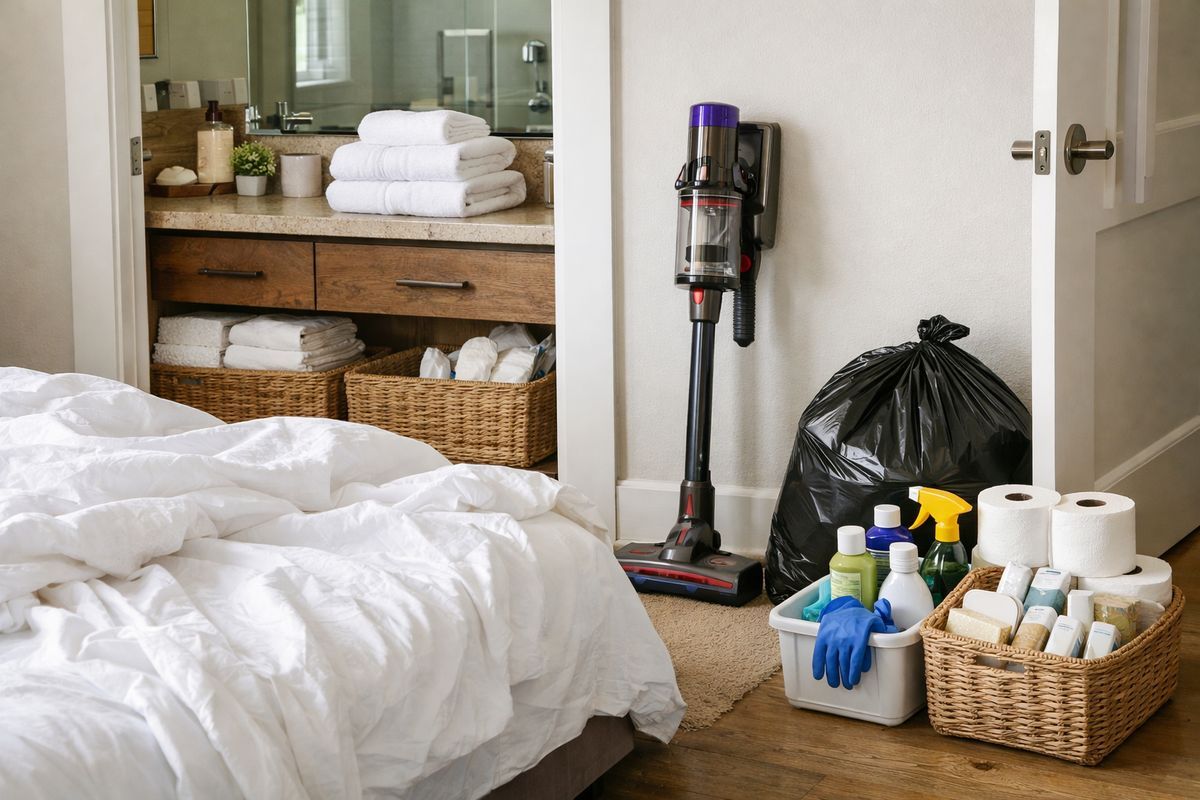
A proper turnover covers more than wiping counters and vacuuming floors. It includes sanitizing bathrooms and kitchens, changing and checking linens, taking out trash, restocking supplies, staging the space, and catching damage before the next guest walks in. If you want a fuller picture of what gets handled between stays, this is where hosts usually underestimate the labor.
That hidden labor is exactly why short-term rental margins shrink faster than expected. You pay for readiness, not just cleanliness.
Why licensed, reliable cleaners protect margins
Consistency protects revenue. E3R Cleaning is a licensed local service with a 5.0 Google rating and a 5.0 Thumbtack rating, and that matters because reliable turnovers reduce guest complaints, refund requests, and review damage. The service also lists vacation rental cleaning as a dedicated offering, which reflects how different this work is from a standard house clean.
The move that works: use a dependable cleaning partner and treat cleaning quality as margin protection, not just a line-item expense.
4. Short-stay margin loss from one-night and two-night bookings
The Los Angeles Times found that in 13% of listings studied, the cleaning fee was as high as or higher than the nightly rate. That tells you exactly why one-night and two-night bookings can wreck profitability.
The labor does not shrink just because the stay is short. You still reset beds, sanitize bathrooms, inspect for damage, restock supplies, and coordinate the next arrival. Revenue gets compressed, but most of the turnover work stays the same. Your calendar looks full while profit drops.
What this means in practice: set a minimum stay that protects your cleaning economics, especially during lower-rate periods. If your turnover cost is fixed, your stay length has to carry it.
5. Utilities that rise with occupancy, not just ownership
CNBC’s reporting on Airbnb income makes the point clearly: cleaning, maintenance, utilities, insurance, and related costs all reduce what hosts actually earn. Utilities get overlooked because they feel like normal homeownership costs, but guest use pushes them higher than standard residential living.
Electricity climbs with constant thermostat changes, lights left on, and extra laundry. Water, sewer, trash, internet, and streaming services all get used harder in a short-term rental than in a stable household. That difference matters even more in hot, humid Virginia summers, when cooling loads stay high and laundry cycles multiply.
The action is straightforward: calculate an average utility cost per occupied night and build that into your pricing floor. If you’re not sure what happens after each departure, this guide to post-checkout hosting tasks helps show how much occupancy actually drives operating costs.
6. Maintenance, restocking, and small repairs that repeat every month
Hospitable advises hosts to allocate roughly 10% to 15% of each booking toward ongoing maintenance or repairs. That sounds high until you track what really happens in a busy rental.
Light bulbs burn out. HVAC filters need replacing. Walls need touch-up paint. Towels stain. Kitchen tools break. Batteries die in remotes and smart locks. Toiletries, paper goods, and cleaning supplies keep disappearing because that’s exactly what guests are there to use. None of this is unusual. It is normal hosting overhead.
What this means in practice: create a standing maintenance reserve for every booking instead of paying these costs ad hoc. A reserve turns “surprise” expenses into planned expenses, which is how you protect cash flow.

7. Taxes, permits, and local compliance fees you pay to operate legally
NerdWallet found that taxes and fees made up 32% of total booking cost, and that stat is a good reminder that compliance is never free. Guest-facing occupancy taxes get most of the attention, but host-side costs are just as real: business licenses, short-term rental permits, inspections, annual renewals, and registration fees.
Regulatory guides from other markets make the point clearly because they show how quickly those charges add up. The location doesn’t matter as much as the lesson: legal operation comes with paperwork, deadlines, and dollar amounts attached to both. In Hampton Roads, city requirements vary, so your listing in Virginia Beach does not automatically follow the same rules as one in Norfolk, Chesapeake, Hampton, Newport News, Portsmouth, or Suffolk.
The move that works: build a compliance calendar with every permit, renewal, filing date, and fee attached to it. Check city-specific requirements before listing, and check them again before renewing.
What to do this week: run your real-profit check on one listing
Pull one active or planned listing and run the real numbers. Subtract Airbnb fees, cleaning labor, utilities, your maintenance reserve, taxes, and compliance costs from a typical month of bookings. Then compare that result with what you assumed you were making.
That exercise changes pricing decisions fast. Once you see the gap, you stop pricing from the nightly rate forward and start pricing from net profit backward. If you need dependable turnover support, deep cleaning, or move-in and move-out help anywhere in Hampton Roads, request a quote at https://www.e3rcleaning.com/booking-page/.