Airbnb Host Responsibilities After Every Guest Checkout
According to Airbnb, hosts should thoroughly clean and reset a space between every guest stay, every time. That simple rule defines Airbnb host responsibilities after checkout more than any chore list ever will. If you host in Hampton Roads, where guests in Virginia Beach, Norfolk, Chesapeake, Portsmouth, Suffolk, Hampton, and Newport News expect hotel-level readiness, your job after checkout is to turn a used space back into a clean, safe, fully stocked stay.
What airbnb host responsibilities mean after every guest checkout
Airbnb host responsibilities after checkout mean you are responsible for the result: a property that is clean, safe, accurate to the listing, and ready for immediate use. A guest can help with a few light departure tasks, but the cleaning outcome stays on you.
Airbnb’s own hosting guidance puts the standard in plain view. Hosts are expected to make sure every listed space is clean and free of health hazards at check-in, and Airbnb recommends a full clean between every stay, whether you do it yourself or hire a cleaner. What this means in practice is simple: checkout is not the end of one reservation only. It is the start of your next review.
That distinction matters because many hosts blur the line between guest courtesy and host duty. Guests can gather towels or bag trash. Guests do not own your laundry backlog, your bathroom grime, your sand-filled entryway, or your missing inventory. You do.
If you treat turnover like a quick tidy, standards slip fast. If you treat it like an operating system, your property stays bookable.

The core rule: you own the turnover, not the guest
Airbnb’s current checkout guidance is built around a clear idea: guests should be able to leave without being assigned excessive cleaning tasks, while you remain responsible for the standard turnover cleaning that happens between reservations. Airbnb even notes that guests can report excessive checkout tasks, and repeated low ratings tied to unreasonable demands can put your listing at risk.
Here’s the simplest version of this: ask guests for light help that protects the property and speeds access, then handle the real reset yourself.
That matters even more if you charge a cleaning fee. Airbnb’s guidance frames that fee as payment for standard turnover cleaning, not permission to offload chores onto guests. Laundry, vacuuming, bathroom scrubbing, bed remaking, and kitchen sanitizing still belong to you.
What guests can reasonably be asked to do
Airbnb allows simple checkout requests, and hosts can add them directly in the listing’s arrival guide. Reasonable tasks are quick, clear, and low friction. Good examples include putting used towels in one spot, bagging trash, turning off lights or HVAC, locking doors, closing windows, and returning keys or access devices.
A short list works best because short lists get done. If a guest can finish the tasks in under five minutes without feeling like unpaid labor has been assigned, the request is probably fair.
What this means in practice: keep your checkout list to three to five simple tasks, and make each one concrete. “Place used towels in the tub” works. “Clean up before you leave” does not.
What you should never push onto guests
Heavy chores create resentment, confusion, and bad reviews. Airbnb’s guidance says checkout should not require excessive or deep cleaning, which means you should not ask guests to strip every bed, run multiple loads of laundry, vacuum, mop, scrub bathrooms, or perform a full kitchen reset just because checkout day has arrived.
The same goes for chore stacking. A guest who has already paid a cleaning fee does not want a list that includes dishes, laundry, trash removal, bed stripping, and floor cleaning. That feels like you charged for a service you did not intend to provide.
There is also a practical problem. Guests do not clean to your standard. Even when the intent is good, beds get stripped halfway, wet towels get left on wood floors, dishes go back greasy, and laundry sits damp in the washer. You still have to inspect and redo it.
Why post-checkout standards directly affect reviews, revenue, and ranking
Airbnb states that visible issues such as hair in the bathroom or dirty dishes in the sink can lead to bad reviews or even an early checkout. That sounds obvious, but the business impact is bigger than most hosts admit. A weak turnover does not just create one complaint. It chips away at trust, occupancy, repeat bookings, and search performance.
Cleanliness is one of the first things guests judge because it is easy to verify. Within minutes, a guest sees the floors, smells the bathroom, touches the counters, opens the fridge, and checks the bed. If anything feels used, the listing stops matching the promise you sold.
In competitive Hampton Roads markets, that standard matters more, not less. Virginia Beach guests notice sand on the floor. Military relocation guests in Norfolk and Chesapeake notice depleted supplies because the stay is functional, not just recreational. Families in Suffolk, Hampton, Portsmouth, and Newport News notice sticky surfaces fast because children touch everything.
According to Airbnb’s host education resources, hosting success is tied to strong guest experience and consistent reviews. What this means in practice is direct: your turnover quality controls your revenue more than your decor does. A cleaner property books easier, earns better ratings, and creates fewer refund disputes.
Start with a fast, repeatable checkout workflow
Airbnb recommends a repeatable cleaning process, including opening windows when possible, starting laundry early, cleaning high-touch surfaces, and finishing floors last. The move that works is building a fixed sequence that starts the moment the guest leaves.
Your workflow should go like this: confirm departure, enter the property promptly, open the space for airflow, document the condition, collect obvious trash, start linens, then clean room by room in the same order every single stay.
Why this order? Because turnover failure usually comes from interruptions, not effort. If you wander, you miss damage. If you reset beds before checking stains, you bury evidence. If you leave laundry until the end, you create a bottleneck. A sequence fixes all three.
This is where a true between-stays cleaning process matters. The goal is not “clean enough.” The goal is a reset that can be repeated under time pressure without skipped steps.
Build a 30-Minute first walkthrough
Airbnb advises hosts to schedule enough time between bookings and to understand the full cleaning process personally, even when using cleaners. Your first walkthrough should happen before serious cleaning starts, and it should take about 30 minutes in an average property.
Start at the entry and move top to bottom, room by room. Look for trash overflow, odors, spills, damage, forgotten items, pests, stains, broken fixtures, wet spots, clogged drains, missing linens, and anything that changes the next check-in. Open the fridge. Open the microwave. Check under beds. Look behind bathroom doors. Scan outlets, remotes, and lamps.
This walk tells you whether you are doing a standard turnover or handling a problem property. That difference matters because a routine clean and a recovery clean are not the same job.
Your action for this section: do the walkthrough before touching anything else.
Document the condition before you reset anything
A property only tells the truth before the reset starts. Once trash is removed, beds are remade, and surfaces are wiped, evidence disappears.
Take timestamped photos of every room, plus close-ups of anything abnormal: stains, broken items, missing items, extra mess, pet damage, smoking evidence, or maintenance issues. Add short notes with the date, reservation, and what needs repair now versus later.
This protects you in damage disputes, supports cleaner accountability, and gives you a record when patterns show up. If the same lamp is loose three stays in a row, the issue is not guest behavior. It is missed maintenance.
What this means in practice: photograph first, clean second.
Clean to guest-ready standard, not “good enough”
Airbnb’s cleaning checklist requires hosts to confirm that surfaces, floors, linens, bathrooms, appliances, dishes, trash, and soap supplies are all ready for the next guest. That is the standard. Not “looks fine from the doorway.” Ready for immediate use.
Guest-ready has two parts. The space must look clean, and it must function clean. A counter can shine and still feel greasy. A bathroom can smell like bleach and still have hair behind the toilet. A made bed can look crisp and still have a stained duvet.
That is why turnover cleaning is not general house cleaning. It is performance cleaning. Every visible and touchable part of the property has to communicate freshness, order, and readiness.
Reset high-touch surfaces every time
Airbnb specifically recommends cleaning high-touch surfaces like remotes and doorknobs between every stay. Add light switches, cabinet pulls, faucet handles, appliance handles, thermostats, bedside tables, stair rails, and entry touchpoints to that list.
Guests notice these surfaces because these are the first things touched after arrival. If the TV remote is sticky or the fridge handle shows grime, confidence drops instantly. Once trust drops, guests inspect harder.
What this means in practice: make high-touch points part of every turnover, even if the rest of the room looks barely used.
Clean floors, baseboards, and entry areas with intent
In coastal Hampton Roads properties, floors tell the story of the last stay. Sand near the door, grit in grout lines, pet hair in corners, crumbs under stools, and dust along baseboards all signal rushed cleaning.
Entry areas matter most because they shape the first ten seconds. If a guest walks into a clean-smelling home but sees tracked dirt by the door, the impression is already damaged. The same goes for stair edges, hallway corners, and under dining chairs.
Airbnb recommends sweeping or mopping floors last. That order works because you clean debris from every higher surface first, then remove what falls. Do not reverse it.
Remove odors instead of masking them
Odor control is not fragrance control. A strong scent does not prove cleanliness. It often suggests the opposite.
Real odor sources are usually easy to trace: trash, food residue, fridge spills, sink drains, damp towels, laundry left in the washer, pet bedding, upholstery, mildew, or HVAC filters. Eliminate the source, dry the area, ventilate the room, then reassess.
This matters in Hampton Roads because humidity amplifies odor fast. A small damp smell in Virginia Beach or Hampton becomes a guest complaint by evening if airflow and moisture control are ignored.
Your action here is direct: if you smell something, find the source before the next guest arrives.
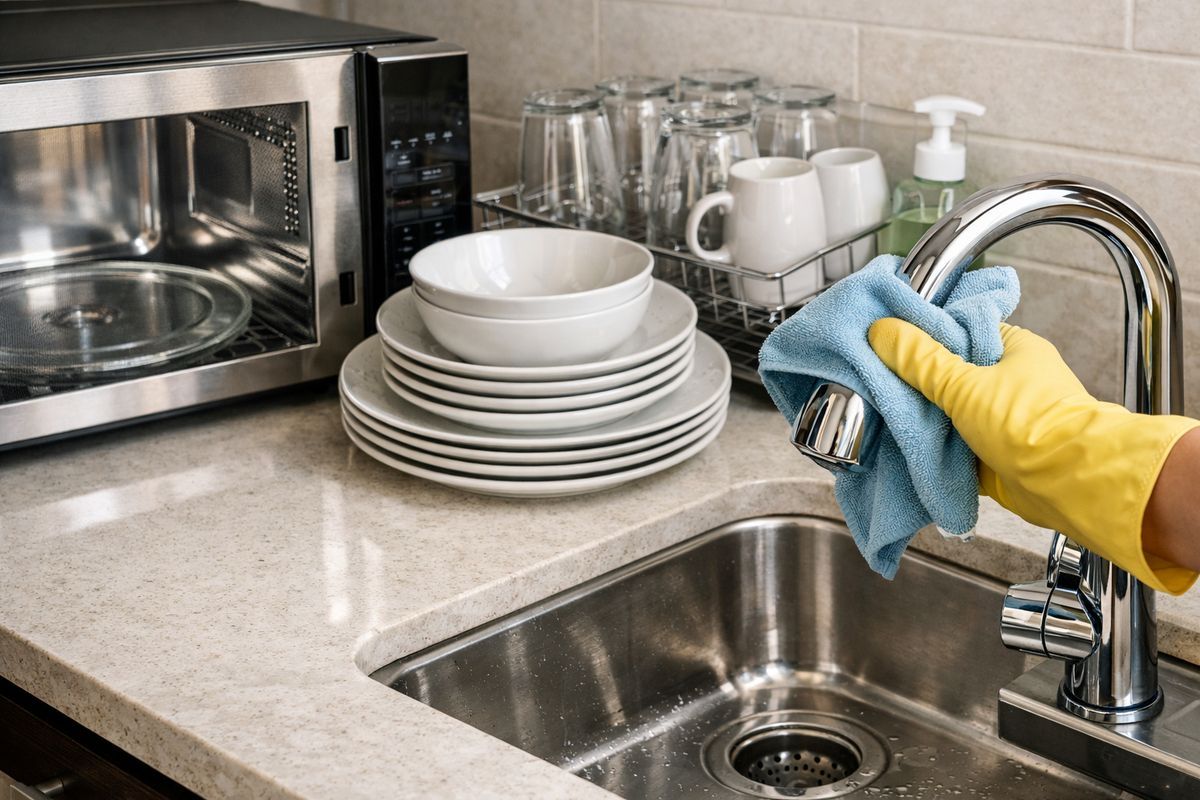
Handle the bathroom like a review-winning zone
Airbnb says hosts should ensure all spaces are clean and free of health hazards at check-in. No room carries that burden more visibly than the bathroom. Guests forgive dated tile faster than a dirty toilet. They forgive a small vanity faster than hair in the shower.
Bathrooms work as trust tests because they combine sanitation, moisture, odor, and detail. If your bathroom passes inspection, guests assume the rest of the property is under control. If it fails, the whole stay feels questionable.
Clean the toilet fully, inside and out. Clean the seat hinges. Wipe the base. Scrub the sink and faucet until water spots are gone. Clean the mirror to a streak-free finish. Remove soap film from showers and tubs. Check grout appearance, clear drains, empty trash, and inspect corners where hair collects.
Stage it like a space meant for immediate use. That means dry surfaces, folded fresh linens, visible toilet paper backup, and no half-used guest items left behind.
Replace, fold, and stage linens properly
Fresh towels are not enough. Presentation matters because it signals whether the items are truly ready.
Replace all used towels, washcloths, bath mats, and hand towels with clean ones every stay. Fold or hang them consistently. Put extra toilet paper where it is visible, not hidden in a random cabinet. Make sure guest-facing items look intentional, not rushed.
According to third-party turnover guidance and host best practices, fresh linens and towels are a baseline expectation between guests. What this means in practice is simple: the bathroom should look untouched, not recently recovered.
Reset the kitchen for immediate use
A guest should be able to walk into the kitchen, put groceries away, pour a drink, make coffee, and use the sink without cleaning anything first. That is the standard.
Airbnb’s cleaning checklist includes appliances, dishes, trash, soap, surfaces, and readiness for the next guest. So clean the countertops, sink, faucet, microwave, stovetop, refrigerator, cabinet fronts, handles, and dining surfaces. Empty trash completely. Replace liners. Check dishware, utensils, and glassware for actual cleanliness, not just storage position.
The kitchen is where “good enough” fails fastest. A single crumb drawer, greasy microwave, or coffee maker with yesterday’s grounds makes the entire property feel used.
Check appliances inside and out
Guests open appliances immediately. That means the inside matters as much as the front.
Check the refrigerator for spills, sticky shelves, leftover food, and odor. Check the microwave for splatter. Inspect the oven or stovetop for grease and burnt residue if guest cooking is allowed. Empty the coffee maker and clean the carafe or pod area. Confirm the dishwasher is emptied or clearly ready to run.
Appliance failure belongs in this section too. If the fridge is not cooling or the microwave plate is missing, you have a listing accuracy problem, not just a cleaning problem.
Restock consumables without guesswork
Consumables should not run on memory. They should run on a set par level.
Restock toilet paper, paper towels, dish soap, hand soap, sponge, trash bags, and coffee basics if promised in your listing. Check every turnover, not every few stays. Supplies that look “probably fine” are exactly the ones that get depleted on arrival.
This is also where host costs creep upward when systems are loose. If you want a cleaner view of supply planning, it helps to understand the expenses hosts miss between bookings, because understocking and last-minute replacement both cost more than a real inventory routine.
Strip, wash, and rebuild bedrooms the right way
https://www.youtube.com/watch?v=UmB4lA43dNg
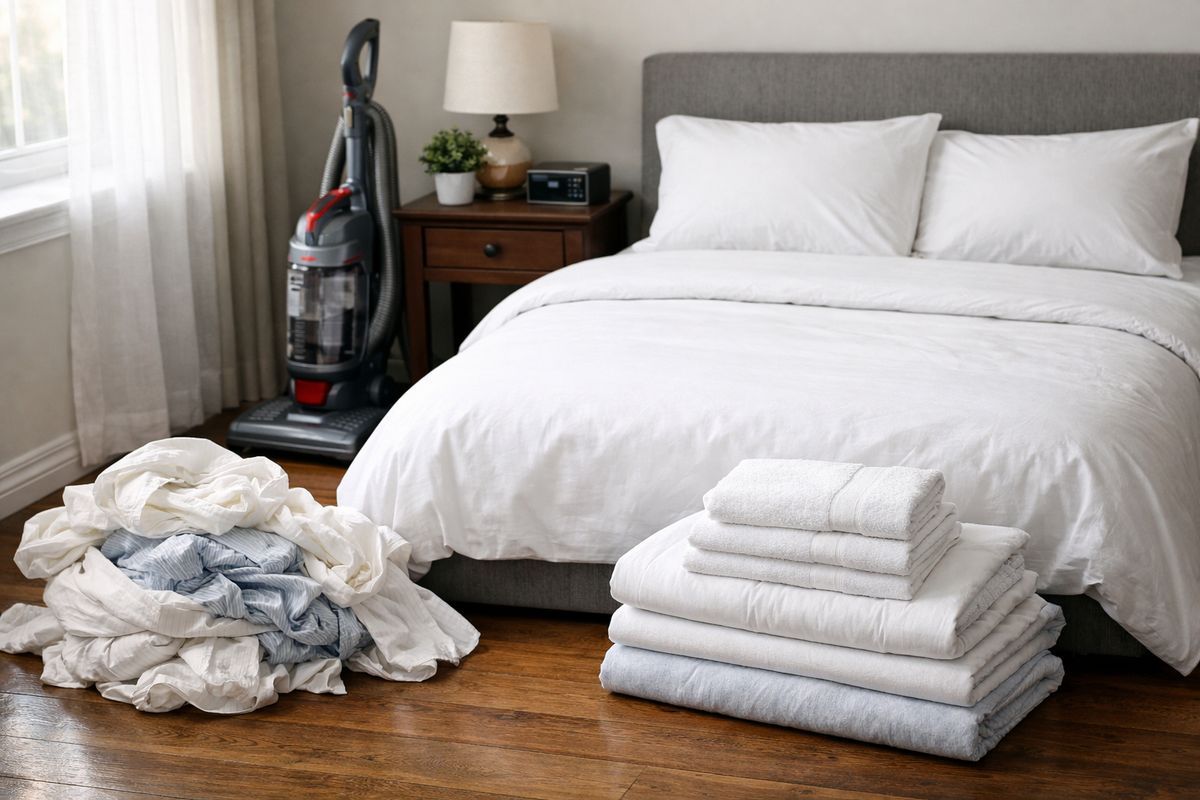
Airbnb’s cleaning tips recommend stripping beds and starting laundry early in the turnover. That order matters because bedrooms take longer than they appear to take. A bed is not reset when the sheets are changed. It is reset when the whole sleeping area is clean, inspected, and rebuilt.
Strip every used bed. Check pillow protectors and mattress protectors. Inspect the mattress surface, bed skirt, headboard, and under-bed area. Dust lamps, wipe nightstands, clear closet debris, and make sure hangers and storage space are usable. Then rebuild the bed with clean linens that fit properly and look intentional.
Guests judge sleep spaces with almost no patience. If a bedroom feels dusty, wrinkled, hairy, stained, or stale, the property stops feeling cared for.
Inspect for stains, hair, and wear before remaking beds
Never remake a bed before checking the linens and the bed itself. That is how small problems become public problems.
Look for hair on pillowcases, stains on sheets, makeup on duvet covers, worn blankets, torn protectors, and yellowing pillows. Check mattress edges and the headboard for dust and marks. If something is dingy, remove it from rotation. If something is damaged, document it before replacement.
What this means in practice: bed-making is the last step in bedroom cleaning, not the first.
Inspect for damage, missing items, and safety risks
Airbnb’s host education materials tie cleanliness and hospitality to broader property management responsibilities, and community guidance around AirCover reinforces that protecting your property is part of hosting. After checkout, your job is not just to clean. Your job is to catch what changed.
Check for broken lamps, chipped dishes, stained upholstery, missing towels, missing remote controls, loose handles, dead batteries, leaks under sinks, tripped breakers, smoke detector issues, pest signs, mold spots, and trip hazards such as loose rugs or lifted flooring.
This is where money is saved. A leak caught at 11:15 a.m. is a small repair. A leak discovered by the next guest at 5:30 p.m. is a complaint, a refund risk, and water damage.
What to check before the next guest arrives
Before the next arrival, verify the non-negotiables: doors lock properly, lights work, Wi-Fi connects, HVAC responds, hot water runs, toilets flush, showers drain, appliances power on, and access instructions still match reality.
If your listing says there is a hair dryer, check that it is there. If your digital lock code changed, confirm the message went out correctly. If your grill is listed, make sure it is safe and usable. Listing accuracy is not marketing. It is an operational responsibility.
Your action here is direct: perform a final function check, not just a visual check.
How to handle guest damage without delaying turnover
Damage triage needs speed. Start by documenting the issue with photos and notes. Then separate the problem into two categories: must fix before check-in, and can wait until after the next stay.
Must-fix items include broken locks, plumbing issues, bedding damage on occupied beds, unusable bathrooms, major stains, missing required amenities, safety hazards, and anything that makes the listing inaccurate. Cosmetic issues that do not affect safety or promised function can be scheduled later, but they still need a plan.
The key is not to let damage reporting freeze the reset. Restore usable condition first. Then pursue the claim.
Restock the property so nothing feels depleted
Checkout responsibilities include inventory control. If your clean property feels half empty, it still feels neglected.
Restock all expected items after every stay: linens, towels, toiletries, soap, paper goods, dish supplies, coffee or tea if promised, batteries for remotes, and any welcome items listed in your description. Count backup inventory too, not just what is visible.
Depletion is one of the fastest ways to create a “not as described” feeling without any dramatic failure. Guests rarely praise stocked basics, but they absolutely punish missing ones.
In family-heavy and relocation-heavy stays across Norfolk, Chesapeake, and Newport News, basics matter even more because the property is being used like a temporary home. A missing trash bag or a single roll of toilet paper turns into immediate frustration.
Check for forgotten items and handle them professionally
Forgotten items are common, and the right time to find them is during turnover, before new guests arrive and mix the record.
Check drawers, closet floors, behind doors, bathroom hooks, outlets, under beds, inside the washer and dryer, behind nightstands, and near entry benches. Chargers, jewelry, medication, children’s items, and small electronics are the usual misses.
If you find something, photograph it where found, label it with the date and reservation, and store it in a designated place. Then send a short, clear message with the item description and the next step for return. Do not improvise the process each time. Confusion wastes time and creates distrust.
What this means in practice: lost-item handling is part of turnover, not an afterthought.
Review the space against your listing photos and description
Turnover is the best moment to compare the real property against the version you advertise. The space is empty, visible, and easy to assess honestly.
Look at your main listing photos and then look at the unit in front of you. Is the rug still in good condition? Are the dining chairs the same? Is the lamp broken? Is the patio furniture worn? Did an amenity disappear three stays ago and never get replaced? If your listing shows a polished, well-stocked space but your current unit has faded linens and missing extras, your problem is not just cleaning. It is accuracy.
Airbnb places real weight on listing accuracy because guests book based on what you present before arrival. If the condition or amenities changed, update the listing or restore the item before the next guest checks in.
Your action here: once a month, use one turnover to compare every room to your listing photos.
Build enough time between bookings for a real turnover
Airbnb advises hosts to schedule enough time between bookings for a thorough turnover. That sounds basic, but it is one of the most ignored host responsibilities. Tight calendars break standards faster than lazy cleaning ever does.
A rushed turnover leads to skipped inspection, damp laundry, understocked supplies, missed damage, dirty appliance interiors, and bad staging. Then the next guest arrives exactly on time and notices all of it.
Industry turnover guidance commonly frames a 3 to 5 hour window as the working range for many properties, with at least a 4-hour gap making same-day turns more realistic in average units. What this means in practice is simple: if your property size, laundry setup, and cleaner availability do not fit that window, your calendar should not pretend that they do.
When same-day turnovers work
Same-day turnovers work when the property is small to mid-sized, the stay was short, the guest load was moderate, the cleaner is trained, backup linens are on site, laundry capacity is nearby or fast, supplies are stocked, and no maintenance issue is pending.
You also need a fixed workflow and a final inspection. Without both, same-day turnover is just hope with a booking attached.
For hosts balancing work and family, same-day turns only work if your system can keep performing when your day goes wrong. Traffic in Virginia Beach, tunnel delays near Hampton, or schedule shifts in Norfolk can erase a fragile plan quickly.
When to add a buffer day
Add a buffer day when the home is larger, beach traffic is active, the stay involved pets, children, long occupancy, extra sleepers, outdoor use, or visible wear that keeps building between visits.
Buffer days also make sense after longer stays because lived-in properties need more than a standard reset. Cabinets get messy, drains get slower, upholstery gets used harder, and inventory drifts.
This is especially true in Hampton Roads summer patterns, where sand, humidity, and family travel multiply the cleaning load. A buffer day protects standards and protects your schedule.
Use a checklist so standards stay consistent
Airbnb’s host resources recommend a full checkout checklist covering surfaces, floors, linens, bathrooms, kitchenware, appliances, trash, and freshness. That advice exists for one reason: memory fails under pressure.
A checklist is the move that works when work gets busy, kids need something, a cleaner is covering last minute, or you are turning over more than one property in a day. It converts standards from “what you usually remember” into “what gets done every time.”
A good checklist also makes delegation real. If someone else is cleaning, a written standard keeps your expectations visible. If you are cleaning yourself, it reduces mental fatigue and prevents skipped details near the end.
What a strong turnover checklist must include
A strong checklist covers the whole property in a set order: entry, living areas, bedrooms, bathrooms, kitchen, laundry, outdoor areas, trash, damage inspection, inventory, and final staging.
Photo checklists help too. A photo of the remade bed, stocked bathroom, cleared fridge, and locked entry can serve as proof of completion and a quick quality audit. Supply checklists matter just as much because cleaners should never waste turnover time discovering there are no trash bags left.
If you are also deciding how to structure guest charges, it helps to understand how hosts handle cleaning inside the rate, because pricing decisions and checkout expectations need to match the service standard you actually deliver.
Communicate checkout instructions clearly and briefly
Airbnb says hosts can add checkout instructions in the listing editor, and guests can see those instructions before booking and during the trip. That means your departure rules should never be a surprise.
Clear checkout instructions do two jobs at once. They reduce guest confusion, and they protect your turnover window. If guests know what time to leave, where to place towels, where trash goes, and how to secure the property, your reset starts faster and with fewer follow-up messages.
The mistake is writing checkout instructions like a lease agreement. Long instructions get skimmed. Vague instructions get ignored. The move that works is short, direct language.
Keep the list to 3 to 5 simple tasks
Airbnb and multiple hosting guides align on the same idea: keep the list short and reasonable. Three to five simple tasks is enough. That usually means gather used towels, bag trash, turn off lights or HVAC, lock doors, and return keys if needed.
Short lists produce better compliance because guests can remember them without stress. You are not testing effort. You are reducing friction.
Write the list in plain language, place it in the listing and house guide, and keep the wording consistent everywhere. “Checkout is at 10:00 a.m. Please place used towels in the tub, bag kitchen trash, turn off lights, and lock the front door.” That is enough.
Send the reminder before checkout day
Airbnb automatically sends a checkout reminder at 5:00 p.m. the day before departure for guests using the app with notifications enabled. Airbnb also allows hosts to use a checkout card and quick replies so instructions still reach guests who miss app alerts.
That timing works because guests plan departure the evening before, not while dragging luggage out the door. A reminder sent on checkout morning is late. A reminder sent the day before gives guests time to prepare and gives you fewer last-minute questions.
Your action for this section: send one short reminder the day before every departure.
Know what the cleaning fee covers
Airbnb’s guidance is direct here. Cleaning fees are for standard cleaning between reservations. That includes the normal turnover work required to prepare the space for the next guest.
It does not mean deep cleaning is included forever, and it does not justify assigning heavy chores to the departing guest. If you charge a cleaning fee and then ask guests to strip beds, start laundry, vacuum, and scrub dishes beyond ordinary use, your process is out of line with guest expectations and Airbnb’s platform direction.
The better approach is simple. Charge in a way that supports the real work required, then own the work. If a guest leaves abnormal mess or actual damage, that is a separate issue. Standard turnover still belongs to you.
Plan for deep cleaning beyond standard turnovers
https://www.youtube.com/watch?v=hC9t8X3n_CY
Standard turnover cleaning keeps a property guest-ready. Deep cleaning keeps it from slowly declining while still looking passable in listing photos.
These are different systems. Turnover handles visible reset and immediate usability. Deep cleaning handles buildup: grout discoloration, dusty vents, smudged baseboards, dingy upholstery, window haze, cabinet interiors, mattress refresh, and behind-appliance debris.
If you skip deep cleaning, every turnover gets harder and less effective. The property starts clean enough but feels tired. Guests notice that fatigue even when they cannot name it.
This matters for busy hosts across Hampton Roads because humidity, beach traffic, pollen, family travel, and repeated short stays create grime in layers. You need a recurring turnover system and a periodic deep-clean system, not one or the other.
Signs your property needs more than a standard reset
The signs are easy to spot when you stop normalizing them. Grout looks darker than it should. Vents show dust. Upholstery carries stains or odor. Glass looks hazy in daylight. Cabinet shelves feel gritty. Baseboards collect visible buildup. Guest comments mention “mostly clean” or note one recurring area.
Those are not small cosmetic notes. Those are warnings that your baseline is sliding.
What this means in practice: schedule deeper cleaning before reviews start teaching you the lesson. If your home also needs support beyond vacation rental turnover, such as recurring home care or a full reset before move-in or move-out, that same discipline applies to primary residences across Virginia Beach, Chesapeake, Norfolk, and nearby Hampton Roads cities.
Don’t ignore outdoor and entry areas
Guests form an opinion before the front door opens. A clean interior does not erase a dirty entry.
Inspect the porch, patio, balcony, front step, walkway, railing, doormat, lockbox, and exterior trash area after every checkout. Remove debris, wipe visible dirt, check furniture condition, and make sure entry hardware works and looks cared for. If you provide beach gear or a grill, inspect and reset those too.
This matters more in Hampton Roads because coastal conditions move dirt fast. Sand, moisture, leaves, storm residue, and mildew can make an exterior look neglected within days. In Virginia Beach and Suffolk especially, outdoor presentation changes quickly with weather.
Your action here is simple: include the outside in every turnover, not just the inside.

Coordinate cleaners, laundry, and backup coverage
Airbnb recommends having a backup cleaner in case the primary cleaner cannot make a scheduled turnover. That advice exists because the turnover itself is only half the job. The other half is coordination.
You need a clear cleaning schedule, property access, supply restocking method, spare linen system, laundry flow, issue-reporting process, and backup coverage. If any one of those breaks, the next check-in feels the damage.
Laundry is usually the hidden bottleneck. If linens are washed off-site, travel time matters. If linens are washed on-site, machine capacity matters. If backup sets are limited, one stain problem can stall the whole turnover.
That is why many busy hosts use a local turnover-focused cleaning service instead of trying to improvise between work, family, and back-to-back reservations. A specialized team treats the property reset as an operating process, not an extra errand.
What to hand off to a professional turnover team
The responsibilities that benefit most from outsourcing are recurring turnovers, room-by-room cleaning, linen rotation, consumable restocking, damage reporting, photo verification, and issue spotting between stays.
A good team also reduces decision fatigue. Supplies are not forgotten. Beds are not made with mismatched linens. Appliance interiors are checked. Small maintenance issues are caught before they become guest complaints.
According to E3R Cleaning, turnover cleaning services are built specifically for short-term rental owners and property managers who need a fast reset between stays. What this means in practice is straightforward: if your booking frequency is high, outsourcing the repeatable reset is often the best operational move.
Why local vacation rental cleaning matters in hampton roads
Local conditions change the cleaning standard. In Hampton Roads, you are not just cleaning for generic guest use. You are cleaning through sand, humidity, rain, military relocation schedules, family travel, pet stays, and seasonal surges.
A local team understands the difference between a beach-weekend turnover in Virginia Beach and a relocation stay in Newport News. Sand in entryways, damp bathroom fabrics, exterior grime after storms, and quick turn windows all require faster recognition and better systems.
That local knowledge matters for more than vacation rentals too. Hosts often need the same trusted help for recurring home cleaning, deep cleaning, or move-in and move-out resets in Norfolk, Chesapeake, Portsmouth, Suffolk, Hampton, and Newport News. The standard is the same: the property must be ready for real life, not just lightly tidied.
Handle complaints about cleanliness fast
If a guest reports a cleanliness issue after check-in, speed matters more than defensiveness. Airbnb guidance around guest experience consistently points toward prompt communication and clear resolution. The right response is to acknowledge the issue immediately, verify it, fix it fast, and document what happened.
Do not argue first. Do not blame the cleaner first. Do not assume the guest is exaggerating first. A hair in the bathroom or a missed trash bag sounds small to you, but it tells the guest the property was not truly reset.
Ask for a photo if needed, offer the quickest remedy, send help, and record the issue in your turnover notes so the same miss does not happen twice. Fast service recovery protects reviews because guests care about the response almost as much as the original problem.
Your action here: build a same-day correction plan before the complaint happens.
Common mistakes hosts make after checkout
The most damaging post-checkout mistake is rushing the reset. That one error creates the rest. When time gets squeezed, inspection gets skipped, beds get remade before stain checks, supplies go uncounted, and odors get covered instead of solved.
Another common mistake is pushing too much onto guests. Long checkout chore lists save less time than hosts think and create more frustration than hosts expect. Airbnb’s own guidance warns against excessive tasks, and guest complaints on this issue can hurt your listing.
Many hosts also treat scent like proof of cleaning. It is not. If drains smell, towels are damp, or trash leaks into the bin cabinet, fragrance only makes the problem stranger.
Understocking is another repeat offender. One missing soap refill or one nearly empty paper towel roll tells the next guest that nobody really checked the property. The same goes for poor documentation. If you do not photograph damage before resetting, your claim gets weaker by the minute.
And then there is overbooking. Accepting same-day turns without the capacity to execute them is not ambition. It is a quality failure waiting for a review.
What to do this week to improve your checkout process
Pick one move and do it this week. Tighten your post-checkout checklist, cut your guest checkout list down to three to five simple tasks, or line up a reliable local cleaner who can reset the property to guest-ready standard every single time.
If you need trusted cleaning support in Virginia Beach, Norfolk, Chesapeake, Portsmouth, Suffolk, Hampton, or Newport News, request a free quote at https://www.e3rcleaning.com/booking-page/.