How Much to Charge for Airbnb Cleaning Without Losing

Airbnb pricing gets messy fast, and “how much to charge for Airbnb cleaning” is where hosts lose money without noticing. A 2026 market analysis of 685,000-plus U.S. listings found the median cleaning fee was just $75, while the average was $188 because large homes pushed the number up. That gap is the whole lesson: your fee has to match your real turnover cost, not a headline average.
Start with the only number that matters: your real turnover cost
Airbnb’s host guidance says a cleaning fee should cover supplies or housekeeping, not act as extra profit. What this means in practice is simple: start with cost recovery, then check if the number still looks bookable in your market.
What to include in your turnover cost
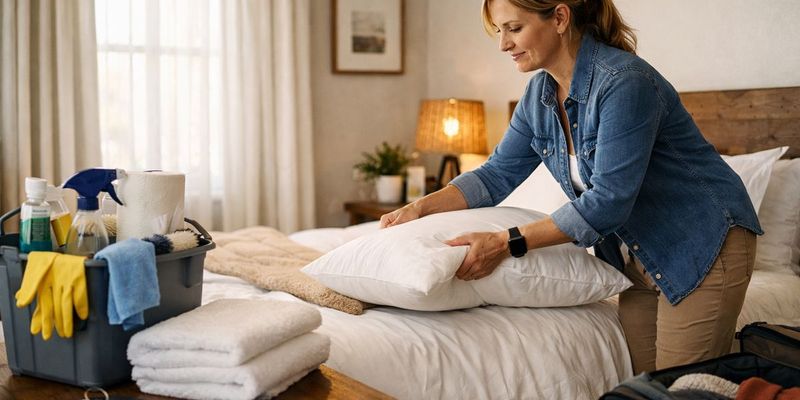
A 2026 Guesty pricing guide defines the cleaning fee as a per-stay charge that covers the full turnover between guests, including linens, surfaces, bathrooms, kitchens, trash, and restocking. Here’s how to use it: count cleaner labor, payroll taxes or contractor invoice, laundry, linens, paper goods, soap, trash bags, travel time, and your own labor if you handle the reset yourself.
That last part matters more than most hosts admit. Airbnb cleaning is not standard house cleaning. It is turnover work with stricter timing, presentation, and readiness. If your rental is in Virginia Beach, sand and damp towels raise the workload. If it is in Norfolk, Chesapeake, Portsmouth, Suffolk, Hampton, or Newport News, back-to-back bookings and family stays still create the same pressure.
The simplest pricing formula to use
A 2026 pricing article from Guesty recommends a simple starting method based on realistic hourly cost times turnover hours, then checked against similar listings. The simplest version of this is: base turnover cost plus a small buffer for admin and surprises equals your starting cleaning fee.
Keep the buffer small and honest. You are covering missed supply runs, extra laundry time, and issue reporting, not creating a hidden profit stream.
Use national benchmarks the right way
AirROI’s 2026 U.S. listing analysis found the median is only $75, even though the average is far higher. What this means in practice: national benchmarks are reference points, not targets.
Typical U.S. fee ranges by property size
The same 2026 analysis found average fees of about $83 for studios, $102 for 1-bedrooms, $156 for 2-bedrooms, $210 for 3-bedrooms, $285 for 4-bedrooms, and $371 for 5-bedrooms. That climb makes sense because cleaning time rises with bedrooms, bathrooms, beds, laundry, and reset complexity.
If you are pricing a compact condo, do not copy the fee from a beach house. If you are pricing a large family rental with multiple baths, do not force a studio-level fee and expect the math to work.
Why median matters more than average
A 2026 AirROI summary shows the average gets inflated by larger homes with heavy turnovers. The move that works is to use median-style thinking for small units so you do not scare off short-stay guests with a fee built for a much larger property.
For a small rental, the average number is often a trap. If you want a better picture of the work itself, review what counts in a guest-ready reset between bookings, then price the scope instead of chasing a national headline.
Check your fee against ADR so guests do not bounce
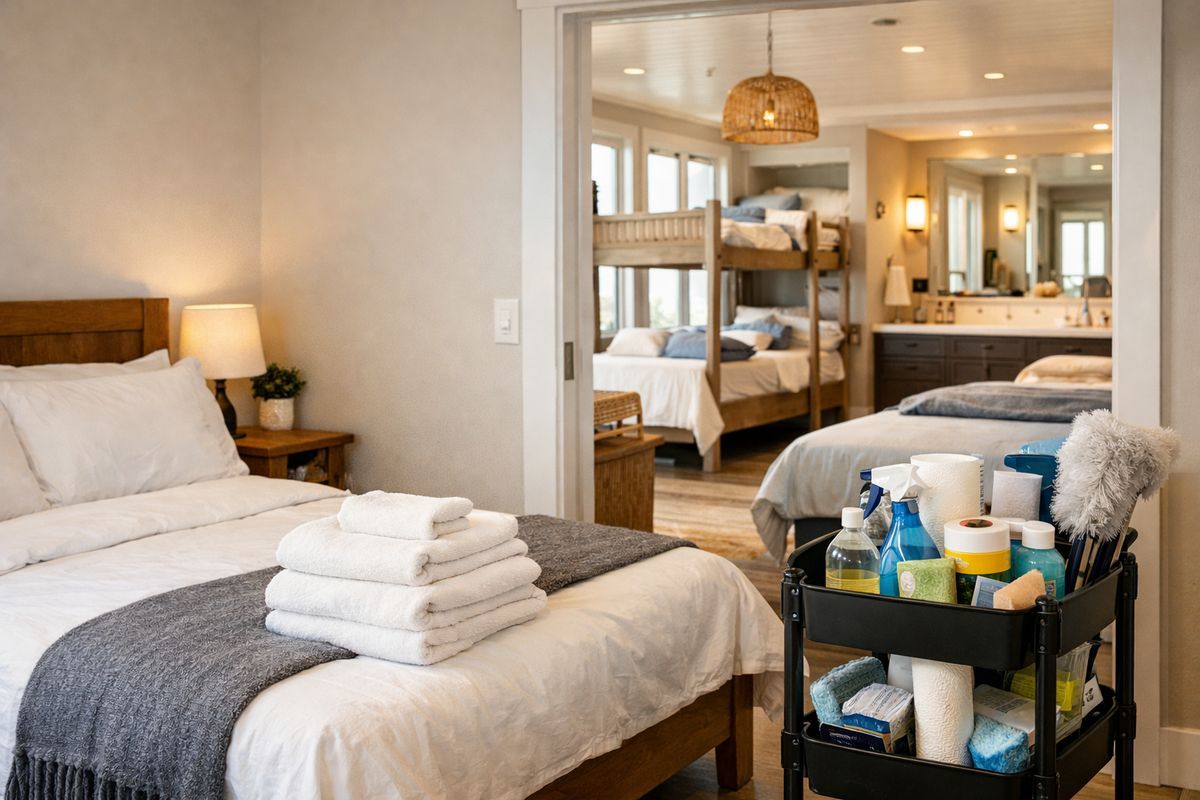
A 2026 market study found the 25% to 50% of ADR band produced the strongest revenue results. What this means in practice: once you know your cost, test whether your fee feels reasonable next to your nightly rate.
A quick ADR test for short stays
Airbnb says guests see the cleaning fee as a separate charge at checkout, and high fees can make them reconsider the booking. On a one-night or two-night stay, a flat fee hits harder because it takes up a bigger share of the total.
If your nightly rate is low and your cleaning fee is close to or above that amount, your conversion drops. In price-sensitive pockets of Hampton Roads, that matters immediately.
When a higher fee still makes sense
A 2026 property-size analysis found each added bedroom and bathroom pushes cleaning time upward, and larger homes support much higher fees. In Hampton Roads, that logic gets even stronger for beach properties, pet-friendly stays, heavy linen loads, and family bookings with tight same-day turns.
The fee is easier to defend when the work is visible and repeatable. If you are resetting several beds, checking supplies, and managing photo-ready presentation under time pressure, your number should reflect that. That workload also overlaps with broader post-checkout tasks every host has to manage, not just wiping surfaces.
Benchmark 10 local listings before you set anything
Guesty recommends benchmarking against 10 similar listings in your area instead of using a global average. Here’s how to use it: compare nearby rentals in Virginia Beach, Norfolk, Chesapeake, Portsmouth, Suffolk, Hampton, or Newport News before you publish a fee.
How to choose true comparables
Match bedroom count, bathroom count, guest capacity, property type, amenities, and neighborhood. A beachfront condo, a military relocation rental, and a suburban family house should not share the same cleaning target.
Local labor cost and guest expectations beat generic advice every time. Your fee has to make sense where your property actually sits.
What to look for beyond the cleaning fee
A 2026 Airbnb pricing guide warns that guests compare total trip cost, not just one line item. So do not copy a low cleaning fee without checking the nightly rate, minimum stay, and occupancy pattern behind it.
Some hosts bury more of the cost in the rate itself. If that model matches your market, study the trade-offs in rolling cleanup into the nightly price before you copy a separate-fee strategy.
Price airbnb cleaning as a turnover service, not a house cleaning visit
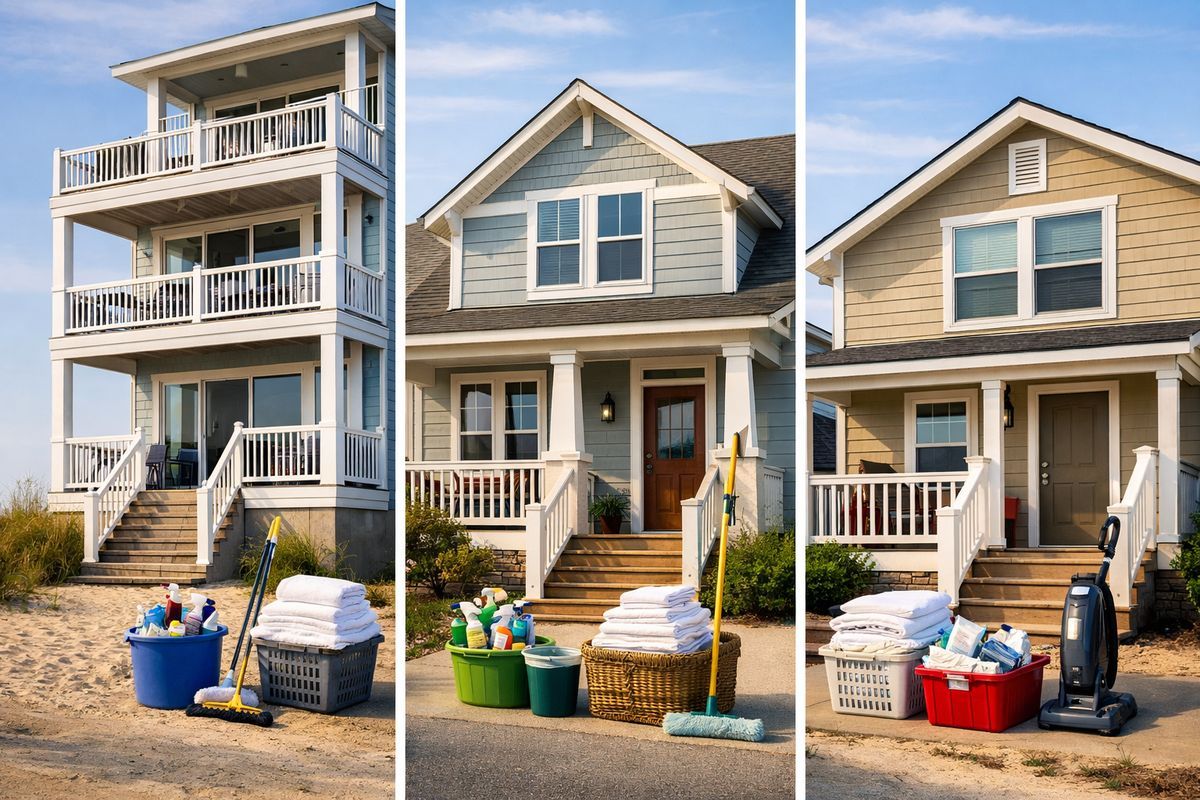
Industry practice in Hampton Roads already separates vacation rental cleaning from recurring home cleaning, deep cleaning, and move-in or move-out work. What this means in practice is direct: if you charge a routine house-cleaning rate for Airbnb turnover, you lose.
What your fee should cover in a guest-ready reset
A 2026 Guesty guide says the cleaning fee should cover linens, bathrooms, kitchen reset, floors, surfaces, garbage, and restocking. In real life, it also covers bed changeovers, supply checks, issue reporting, and photo-ready presentation.
Reliability is part of the service. Readiness is part of the service. Those are not extras.
When to separate add-ons from the base fee
A flat turnover fee works best when the scope is standard. Charge separately for pet hair, excessive mess, deep-clean tasks, late checkout compression, or same-day turn pressure.
That protects your margin without inflating the base fee for every guest.
Avoid the pricing mistakes that cost you bookings or profit
A 2026 Airbnb host resource says to balance actual cleaning costs with bookability. The move that works is disciplined pricing, not guesswork.
Mistake: charging too little to win bookings
Low fees look attractive, but laundry, supplies, and labor do not stay low. If your fee does not recover actual turnover cost plus a small buffer, each booking eats your margin.
Mistake: using the cleaning fee as a profit center
Airbnb says the fee should cover cleaning expense, not create extra income. Guests now see fuller trip totals more clearly, so fee-heavy pricing stands out fast and hurts trust.
Mistake: never revisiting the fee
Guesty advises reviewing cleaning fees every 3 to 6 months or after booking declines and guest complaints. Review yours after 1 to 3 months if cleaner invoices rise or same-day turnovers start straining the operation.
What to charge in practice for small, mid-size, and large rentals
The 2026 data gives useful guardrails, but no universal number exists. Your fee has to clear your real cost, then pass the local and ADR tests.
Small units: studios and 1-bedrooms
Small units often land near the national median-based range when turnovers are simple. Stay close to actual cost and watch short-stay conversion closely.
Mid-size properties: 2- to 3-bedrooms
This is where costs jump because bathrooms, beds, and laundry multiply. A flat fee with defined add-ons usually works best here.
Large homes and high-complexity stays
Four-bedroom-plus homes justify higher fees because the scope is plainly larger. If your rental handles family groups, beach mess, and supply-heavy stays, charge for the workload you are actually carrying.
What to try this week
Calculate the last five turnover costs, average them, and compare that number against 10 local comparable listings in Hampton Roads. Then set one flat cleaning fee that covers your cost and still looks fair next to your ADR. If you want help pricing turnover cleaning or need reliable recurring, deep, or move-in and move-out cleaning in Virginia Beach, Norfolk, Chesapeake, Portsmouth, Suffolk, Hampton, or Newport News, request a quote at https://www.e3rcleaning.com/booking-page/.